Operational Pānui August 2026
Dangerous goods requirements; Changes to Ancillary Surcharges, applying from 1 August 2026; The process for booking import containers off ports.

Operational Pānui August 2026
This Operational Pānui includes information about:
• Dangerous Goods requirements
• Changes to Ancillary Surcharges, applying from 1 August 2026
• The process for booking import containers off ports
Dangerous Goods Requirements
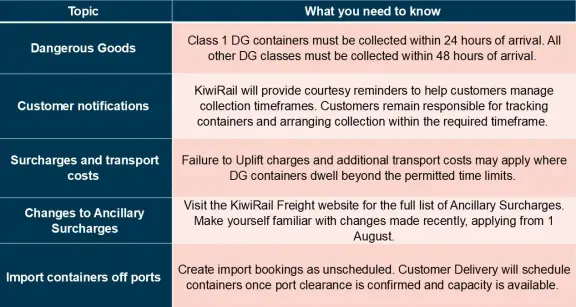
Dangerous Goods dwell limits are an important part of maintaining a safe operating environment across the freight network and ensuring compliance with regulatory requirements.
Under the Health and Safety at Work (Hazardous Substances) Regulations 2017 (“Regulations”), Dangerous Goods may only remain at a transit depot for a limited period. For most DG classes, the maximum legal dwell time is 72 hours.
To maintain compliance and allow time to manage containers approaching regulatory limits, KiwiRail applies operational dwell time limits that are shorter than the statutory maximum.
What You Need To Do
To avoid delays, additional transport costs, or Failure to Uplift charges, please ensure DG containers are collected within the applicable dwell timeframe and notify our Customer Delivery team as early as possible if any collection delays are anticipated.
Early communication allows us to work with customers to manage potential issues before they impact terminal operations or compliance requirements.
How We Can Help
To help customers stay informed and reduce the risk of Dangerous Goods reaching their maximum dwell limits, KiwiRail will provide courtesy notifications within the first 12, 24, and 48 hours after a DG container arrives at the destination Container Terminal.
While KiwiRail will provide these reminders, customers remain responsible for monitoring container status and arranging collection within the required timeframes.
A Handy DG Checklist:
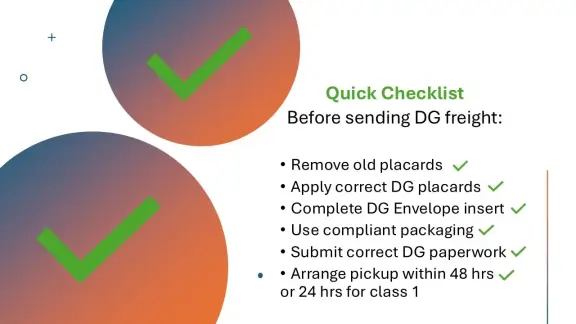
Before sending Dangerous Goods on KiwiRail’s network, please ensure all items on the checklist above are complete.
For more detailed information, please see the Freight Handling Codeopen_in_new on our website.
If Compliance Requirements Are Not Met
Ancillary Surcharges may apply where compliance requirements are not met, including where DG containers remain at terminals beyond the permitted dwell time limits.
While these surcharges have been in place for some time, we are increasing our focus on supporting compliance with these requirements to help maintain safe and efficient terminal operations across the network. More detailed information is provided below:
KiwiRail Dwell Time Limits
KiwiRail’s maximum permitted dwell times at destination Container Terminals are:
• Class 1 Dangerous Goods: 24 hours
• All other DG classes: 48 hours
Where a container is approaching KiwiRail’s dwell time limits, we may need to arrange for its temporary removal from the destination terminal to maintain compliance with regulatory requirements.
This may require the container to be temporarily relocated to another KiwiRail terminal before being returned for collection.
KiwiRail’s operational dwell time limits are set to provide enough time to make these alternative arrangements where they are needed.
When The Dwell Time Starts
The dwell timeframe begins from the moment the container is discharged from the inbound train and placed to ground at the destination terminal.
KiwiRail courtesy notifications are intended to help customers monitor this timeframe. Customers should continue to actively track container status and arrange collection within the applicable dwell time limit.
Failure To Uplift Surcharge
If a DG container is not uplifted within the applicable timeframe, the following will apply:
• A Failure to Uplift Surcharge of $1,500.00 per container, excluding GST, will apply. This will be charged to the account of the customer responsible for the inbound movement.
• In addition to this Failure to Uplift Surcharge, the costs to rail the container to the nearest available terminal and back again will also be charged to the same customer.
• Where they exist, these transport costs will be based on the customer’s existing rates.
• Where customer-specific transport rates are not in place, KiwiRail’s standard rates for the service provided will apply.
• The dwell clock then restarts from the moment the container is discharged from the returning inbound train and placed to ground at the destination terminal.
• The process may be repeated if the container remains at the destination terminal beyond the applicable dwell timeframe.
• KiwiRail recognises that operational constraints can arise where CT sites are closed for an entire weekend. These circumstances will be considered when reviewing the application of Failure to Uplift charges.
Thank you for working with us and keeping our sites, teams and customers safe.
__________________________________________________________________________________________________________________________________________________________
Changes to Ancillary Surcharges, applying from 1 August 2026
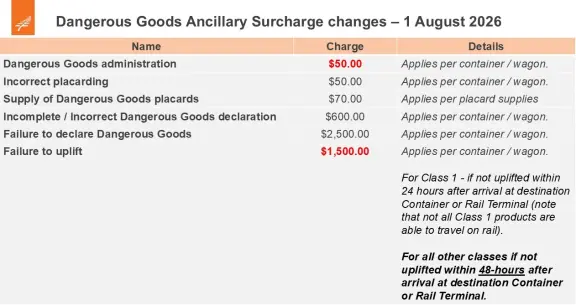
We have reviewed our full list of Ancillary Surcharges that you can find on our freight website. Please make yourself familiar with the list and any recent updates, which are displayed in red.
Some of the changes apply to Dangerous Goods:
• The DG Admin surcharge has increased from $45 to $50 per container.
• We have halved the Failure to Uplift surcharge from $3,000 down to $1,500 per container.
• As mentioned above, any container moved out of a Container Terminal site so it doesn’t breach the 24 or 48 hour limit will be charged to the customer in addition to the Failure to Uplift surcharge.
__________________________________________________________________________________________________________________________________________________________
The Process For Booking Import Containers Off Ports
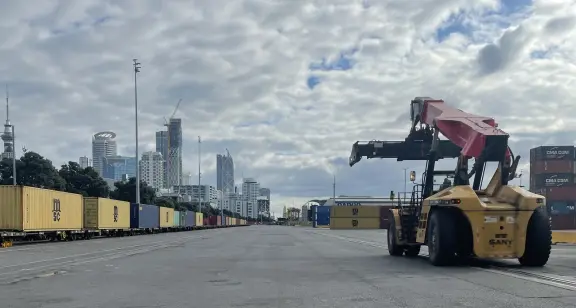
Our Customer Delivery team has identified instances where import containers are being booked and scheduled onto rail services before clearance has been confirmed by the port. This can create confusion and give the impression that containers are ready to move when they remain on hold.
What You Need To Do
To ensure a consistent process, please create all import bookings as unscheduled, particularly for containers moving from Port of Tauranga and Ports of Auckland.
Port of Tauranga Imports
For shipping line customers, Customer Delivery receives a daily report from Port of Tauranga confirming which shipping line containers are cleared to travel by rail and which remain on hold. Once a container is confirmed as cleared, the team will schedule it onto the next available service with sufficient capacity.
For all other customers with import freight moving from Port of Tauranga, bookings must be created as unscheduled. Once all holds and any demurrage have been cleared, you must advise the Customer Delivery team. The container will then be scheduled onto the next available service with sufficient capacity.
Ports of Auckland Imports
For Ports of Auckland imports, Customer Delivery receives a daily report from the port confirming which containers are cleared to travel by rail and which remain on hold. Once a container is confirmed as cleared, the team will schedule it onto the next available service with sufficient capacity.
Following this process will help avoid delays and support the efficient flow of containers from port to rail.
We're Here To Support You
If you have any issues or questions please contact your Key Account Executive or get in touch with our Customer Delivery team:
Phone: 0800 351 351, available 24 hours a day, 7 days a week.
Email: domestic@kiwirail.co.nz or imex@kiwirail.co.nz
Ngā mihi nui,
KiwiRail Freight Team.