Partnership powers lower-carbon steel future for New Zealand
A major new partnership between industry, government and the rail sector is helping create a more sustainable supply chain for New Zealand steel.

- Collaboration between Government, New Zealand Steel, Sims Metal, Contact Energy and KiwiRail supports New Zealand's largest single-site decarbonisation project.
- New Zealand Steel's new Electric Arc Furnace is expected to halve emissions at Glenbrook and reduce New Zealand's total annual emissions by around 1%.
- A new rail siding constructed by KiwiRail at Sims Metal's Otāhuhu facility strengthens New Zealand's lower-carbon steel supply chain.
- Rail transport will move recycled scrap steel efficiently, reducing emissions, congestion and pressure on roads.
- The project demonstrates how industry and government collaboration can deliver practical decarbonisation solutions and support a circular economy.
A major new partnership between industry, government and the rail sector is helping create a more sustainable supply chain for New Zealand steel.
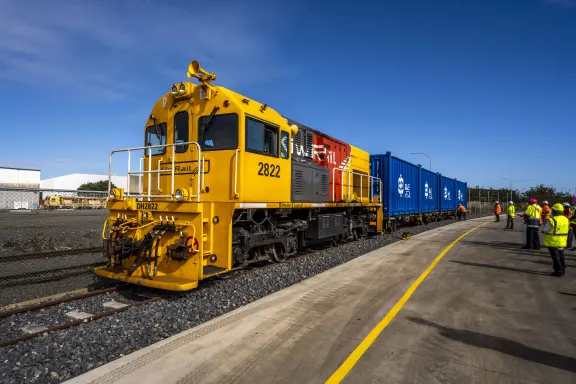
The opening of a new rail siding at Sims Metal's Otāhuhu facility marks a key milestone in developing a rail-enabled circular economy for scrap steel. Constructed by KiwiRail, the siding creates a direct rail connection between Sims Metal and New Zealand Steel's Glenbrook site, strengthening the supply chain needed to support lower-carbon steel production.
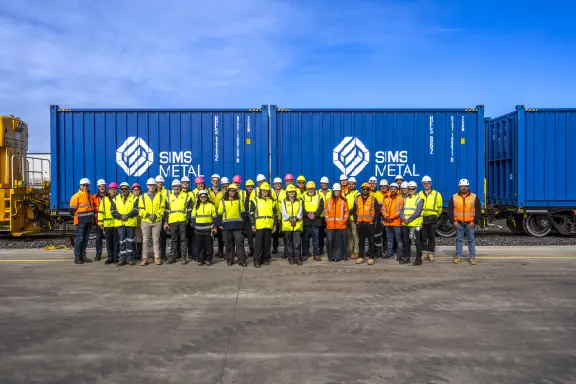
Representatives from the New Zealand Government, Sims Metal, New Zealand Steel, Contact Energy and KiwiRail gathered to celebrate the opening.
The siding supports New Zealand Steel's Electric Arc Furnace (EAF) project at Glenbrook. Once fully operational, the EAF is expected to halve annual greenhouse gas emissions at the site and reduce New Zealand's total emissions by around 1%.
The furnace will use recycled scrap steel and renewable electricity to produce steel with significantly lower emissions than traditional methods. The project brings together key partners across the supply chain, with Contact Energy supplying electricity from our highly renewable grid, KiwiRail providing rail transport, and New Zealand Steel supplying purpose-built containers for scrap steel movements.
KiwiRail General Manager Freight Markets Alan Piper said the project demonstrates the role rail can play in supporting lower-emissions supply chains.
"This is a fantastic example of government and industry working together to achieve a meaningful decarbonisation outcome for New Zealand."
"Rail is helping connect the supply chain that enables New Zealand Steel's transition to lower-carbon manufacturing, while creating a reliable and sustainable long-term transport solution."
The rail service will transport scrap steel by backloading containers on existing freight services, improving network efficiency and reducing transport emissions. Rail freight generates around 60% fewer carbon emissions than road transport on average, while also helping reduce congestion, improve road safety and lower pressure on road infrastructure.
The project delivers a stronger and more sustainable steel supply chain, while demonstrating how collaboration can accelerate New Zealand's transition to a lower-carbon future.